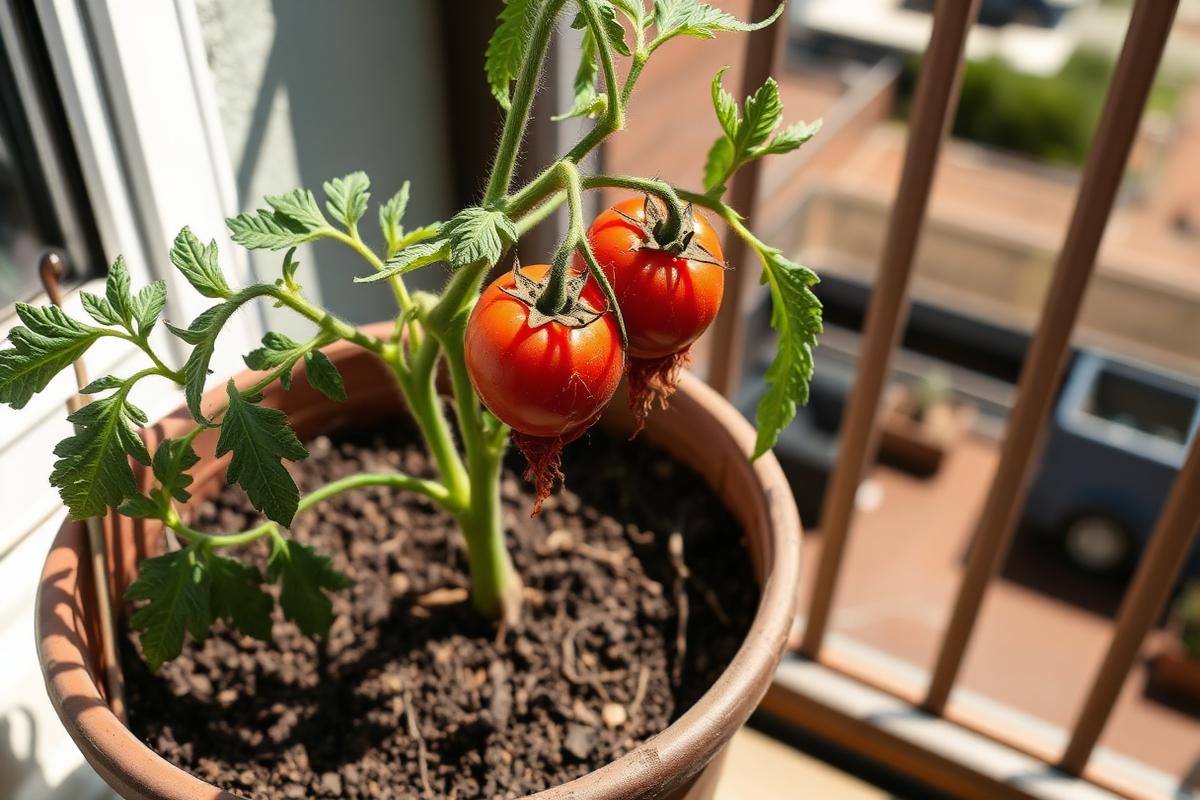
Overwatering is the most common way well-meaning gardeners hurt tomatoes.
✅ Quick Answer
- Is this usually serious?
- It can be. Mild overwatering is easy to reverse; sustained waterlogging causes root rot that isn’t.
- Most common causes
- Watering on a schedule instead of checking the soil
- Pots without drainage, or pots sitting in full saucers
- Heavy clay or compacted garden soil
- Potting mix that stays wet — too fine, or too much water-retaining crystal
- Rain plus your usual watering routine
- First thing to check
- Push a finger 5 cm into the soil. If it’s wet, put the hose down.
- What NOT to do
- Don’t fertilise a waterlogged plant. The roots can’t use it and it adds salt stress.
👁 Look At Your Plant
Work through these before you decide what’s happening. Each one narrows it down.
- Is the soil wet but the plant still wilting? Strong overwatering signal.
- Are the leaves yellowing from the bottom up while the soil stays damp?
- Are there small bumps or white nodules on the lower stem? Those are adventitious roots — a classic waterlogging response.
- Is the soil surface greenish, mossy or algal?
- Does the pot smell sour or swampy?
- Are leaves soft, limp and slightly translucent rather than crisp and dry?
Most Likely Causes
Watering on autopilot
Daily watering is a habit, not a plan. Weather, pot size, plant size and soil type all change how much water a plant needs. Checking takes five seconds and prevents most of this.
Drainage failures
A pot with blocked holes, a decorative outer pot holding water, or a saucer that never gets emptied turns into a bathtub. Roots suffocate within days.
Soil that holds too much
Heavy clay and dense, fine potting mixes hold water at the expense of air. Adding water-retaining crystals to a mix that’s already moisture-retentive compounds the problem.
Root rot
Once roots have been oxygen-starved, rot fungi move in. Roots go brown, soft and smelly instead of firm and white, and the plant can no longer take up water — so it wilts in mud.
🔧 What To Do Now
- Stop watering and let the soil dry to slightly damp before the next drink.
- Empty saucers, lift pots onto feet, and clear blocked drainage holes.
- Move waterlogged pots to a brighter, breezier spot to speed drying.
- For garden beds, fork carefully around the plant to relieve compaction and improve air flow to the roots.
- Trim off badly yellowed lower leaves so the plant isn’t maintaining dead weight.
- For future plantings, mix compost and coarse material through heavy soil, or build up a raised bed.
❌ What NOT To Do
- Don’t repot a stressed plant on the same day unless the soil is genuinely sour — the disturbance adds stress.
- Don’t feed it. Recovery first, fertiliser later.
- Don’t move it into blazing afternoon sun to dry out fast.
- Don’t keep watering because ‘it looks thirsty’. Check first, every time.
💚 Can The Plant Recover?
Mildly overwatered plants bounce back within one to two weeks once the soil dries and the roots get air. Plants with advanced root rot — brown, mushy roots and a sour smell — usually don’t. Sacrifice the plant, sort out the drainage, and try again.
Filed under Tomato Growing Mistakes. General gardening information — climate, soil, variety and local pests vary, so see our disclaimer.