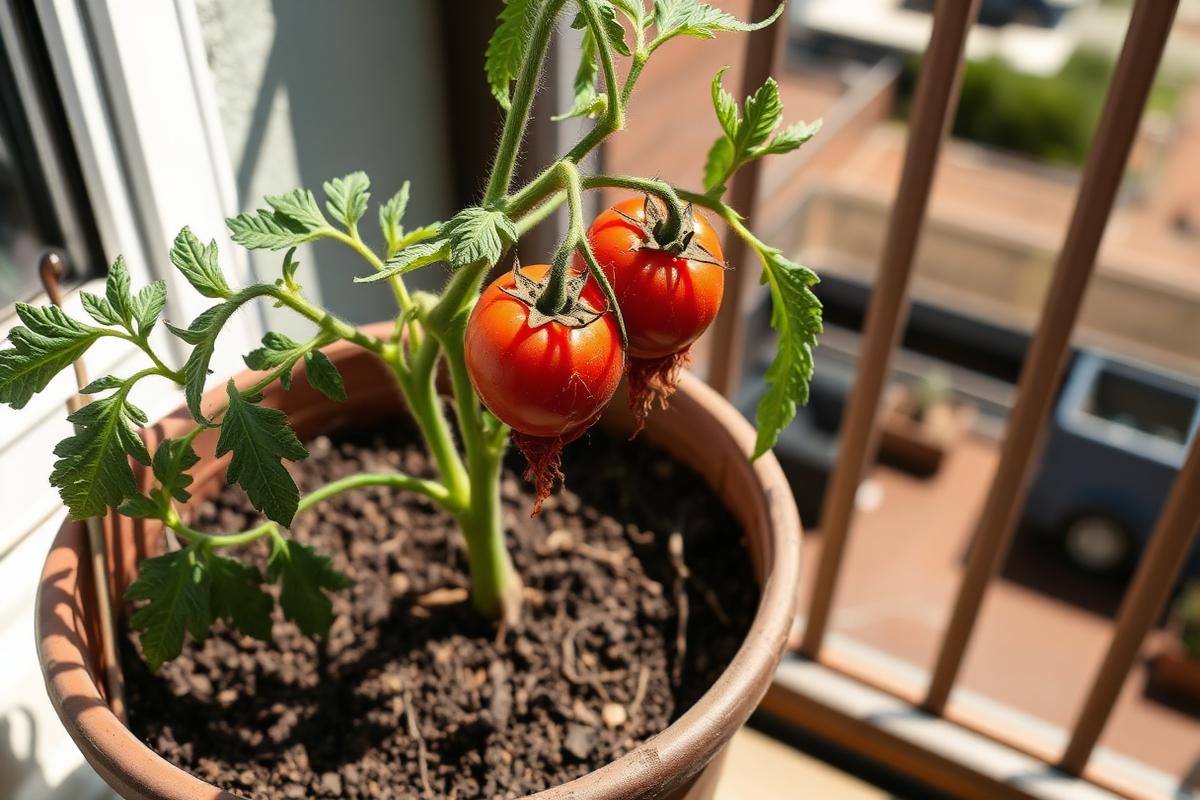
A wilting tomato is either thirsty, drowning, or ill — and those three have completely opposite fixes. Before you water it again, spend thirty seconds working out which one you’re dealing with.
✅ Quick Answer
- Is this usually serious?
- It depends entirely on whether the plant recovers overnight. Overnight recovery is good news.
- Most common causes
- Simple thirst on a hot day
- Waterlogged soil and rotting roots
- Fusarium or verticillium wilt in the soil
- Bacterial wilt in warm, humid regions
- Stem damage, borers or a snapped root ball
- First thing to check
- Check the soil at depth, then check again first thing in the morning.
- What NOT to do
- Don’t water a plant that’s wilting in already-soggy soil. You’ll finish it off.
👁 Look At Your Plant
Work through these before you decide what’s happening. Each one narrows it down.
- Wilts in the afternoon heat, recovers by evening or dawn? Normal heat response or mild thirst.
- Wilted in the cool of the morning with wet soil? Root problem, not thirst.
- Lower leaves wilting and yellowing on one side of the plant? Suspect a soil-borne wilt disease.
- Sudden total collapse of a green, healthy-looking plant? Suspect bacterial wilt or stem damage.
- Check the stem base for chewing, splitting, dark sunken patches or a hole with sawdust.
- Slice a wilted stem lengthwise — brown streaking inside the stem points to a wilt disease.
Most Likely Causes
Heat and thirst
On a 35°C day a big tomato plant can lose water faster than the roots can supply it, even in damp soil. It droops in the afternoon and lifts again as the sun goes off it. Container plants do this daily in summer.
Waterlogging and root rot
Drowned roots can’t move water upward, so the plant wilts while sitting in mud. This is the cruel one, because the natural instinct is to water it more. Check drainage before anything else.
Fusarium and verticillium wilt
Soil-borne fungi that block the plant’s plumbing. Classic signs: yellowing and wilting that starts on lower leaves, often on one side or one branch first, plus brown discolouration inside the stem. There is no cure once a plant is infected.
Bacterial wilt
More common in warm, humid climates and in northern Australia. Plants collapse rapidly while still green. A cut stem placed in clear water may release milky streaming. Affected plants should be removed.
Physical stem or root damage
Borers, cutworms, careless digging, or a stake driven through the root ball can all cut off water supply. Look for damage at soil level before assuming disease.
🔧 What To Do Now
- Do the finger test 5 cm down. Dry and dusty means water deeply. Wet and heavy means stop watering.
- If soil is waterlogged, improve drainage: move the pot out of its saucer, raise it on feet, or fork the bed to relieve compaction.
- Shade the plant through the hottest part of the day while it recovers.
- Check the base of the stem for chew marks, holes or rot.
- If you suspect a soil-borne wilt, remove the plant and don’t replant tomatoes, potatoes, capsicum or eggplant in that spot for several seasons.
- For future plantings in affected soil, choose varieties labelled with V and F disease resistance, or grow in fresh potting mix in containers.
❌ What NOT To Do
- Don’t water again ‘just in case’ without checking the soil.
- Don’t compost plants you suspect of a wilt disease.
- Don’t fertilise a wilting plant. Damaged roots can’t use it and the salts add stress.
- Don’t move a struggling plant into full afternoon sun to ‘dry it out’.
💚 Can The Plant Recover?
Thirsty and heat-stressed plants recover fully, often within hours. Mildly waterlogged plants recover in one to two weeks if drainage improves. Plants with fusarium, verticillium or bacterial wilt do not recover — the sensible move is removing them and protecting the rest of the patch.
Filed under Whole Plant Problems. General gardening information — climate, soil, variety and local pests vary, so see our disclaimer.