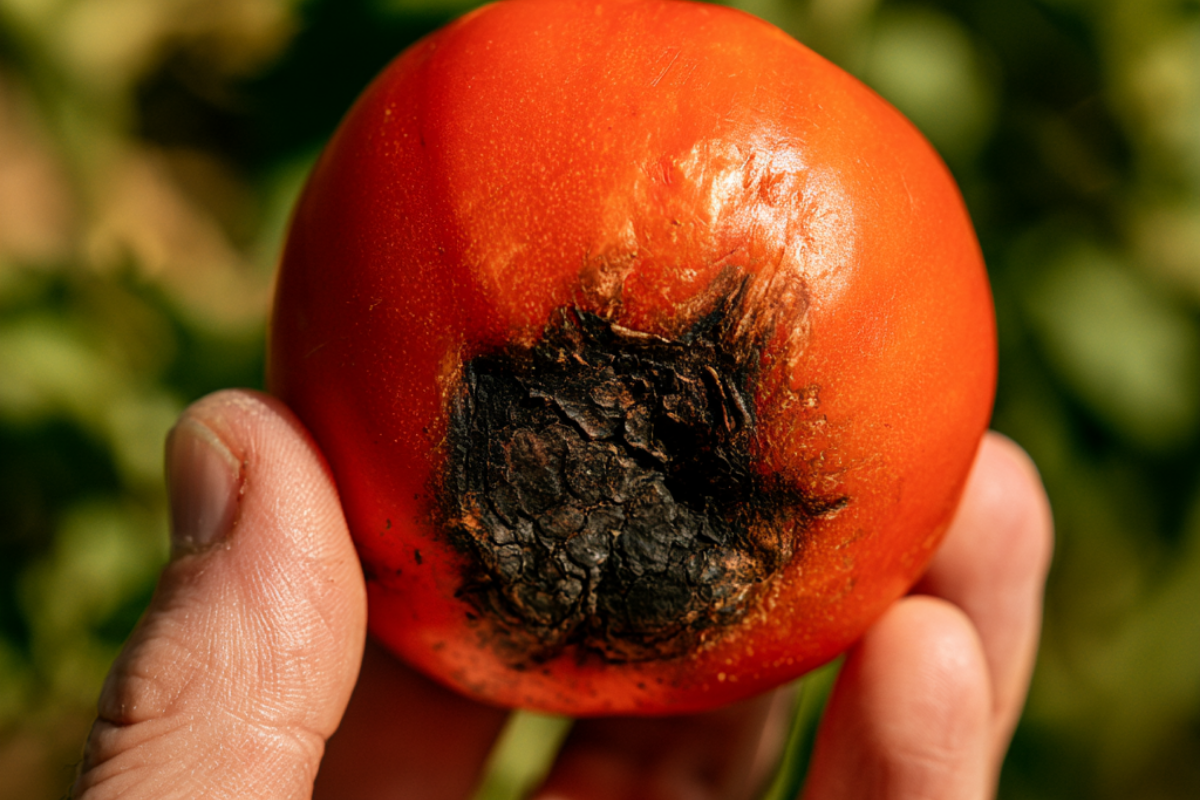
That flat, dark, leathery patch on the bottom of the fruit is blossom end rot.
✅ Quick Answer
- Is this usually serious?
- Not for the plant. Affected fruit is ruined, but the plant is fine and later fruit can be perfect.
- Most common causes
- Irregular watering — the main driver, every time
- Fast growth in heat outpacing calcium delivery
- Container tomatoes drying out between waterings
- Root damage from digging or over-cultivating
- Excess nitrogen pushing leafy growth ahead of fruit
- First thing to check
- How consistent has your watering actually been over the last two weeks?
- What NOT to do
- Don’t dump crushed eggshells, lime or milk on the soil expecting an overnight fix.
👁 Look At Your Plant
Work through these before you decide what’s happening. Each one narrows it down.
- Is the patch on the blossom end (the bottom), not the stem end? That confirms it.
- Is it flat, sunken and leathery rather than soft and mushy?
- Is it the first fruit of the season? Early fruit is the most commonly affected.
- Are the plants in pots or grow bags that dry out fast?
- Have you had a stretch of very hot days followed by heavy watering?
- Any secondary mould growing on the patch? That’s opportunistic, not the cause.
Most Likely Causes
Uneven soil moisture
Calcium moves through the plant in water. When the soil dries out, the flow stops, and the fastest-growing tissue — the far end of a developing fruit — misses out and the cells collapse. The soil may have plenty of calcium. The delivery truck just didn’t arrive.
Container growing
Pots dry out dramatically faster than garden beds, especially small pots in full Australian sun. This is why blossom end rot is so common on balcony tomatoes.
Heat spikes
During a hot spell, the leaves pull water away from developing fruit. Fruit that sizes up during a heatwave is the most likely to show rot.
Root damage
Hoeing, digging, or repeatedly disturbing soil near the plant cuts the fine feeder roots that take up water and calcium.
Too much nitrogen
Heavy nitrogen feeding drives lush leaf growth that competes with fruit for calcium, and ammonium-based fertilisers can interfere with calcium uptake specifically.
🔧 What To Do Now
- Remove affected fruit. It won’t recover and the plant is wasting energy on it.
- Water deeply and regularly. Consistency matters far more than volume.
- Mulch thickly with straw or sugar cane to buffer moisture swings.
- Move small containers up to larger pots, or group them so they shade each other’s sides.
- Switch to a fertiliser formulated for tomatoes rather than a high-nitrogen general feed.
- Stop cultivating the soil around the base of the plant.
❌ What NOT To Do
- Don’t add lime or gypsum without a soil test — you may already have plenty of calcium and you can push pH the wrong way.
- Don’t rely on eggshells. They break down far too slowly to help this season’s fruit.
- Don’t spray milk on the plant. It doesn’t fix calcium transport and it can encourage other problems.
- Don’t panic and rip the plant out. The next truss is often perfect.
💚 Can The Plant Recover?
Affected fruit stays affected — nothing brings it back. But once watering steadies, fruit that sets afterwards is usually clean. Many gardeners lose the first truss to blossom end rot and get a completely normal crop from there on.
Filed under Tomato Fruit Problems. General gardening information — climate, soil, variety and local pests vary, so see our disclaimer.