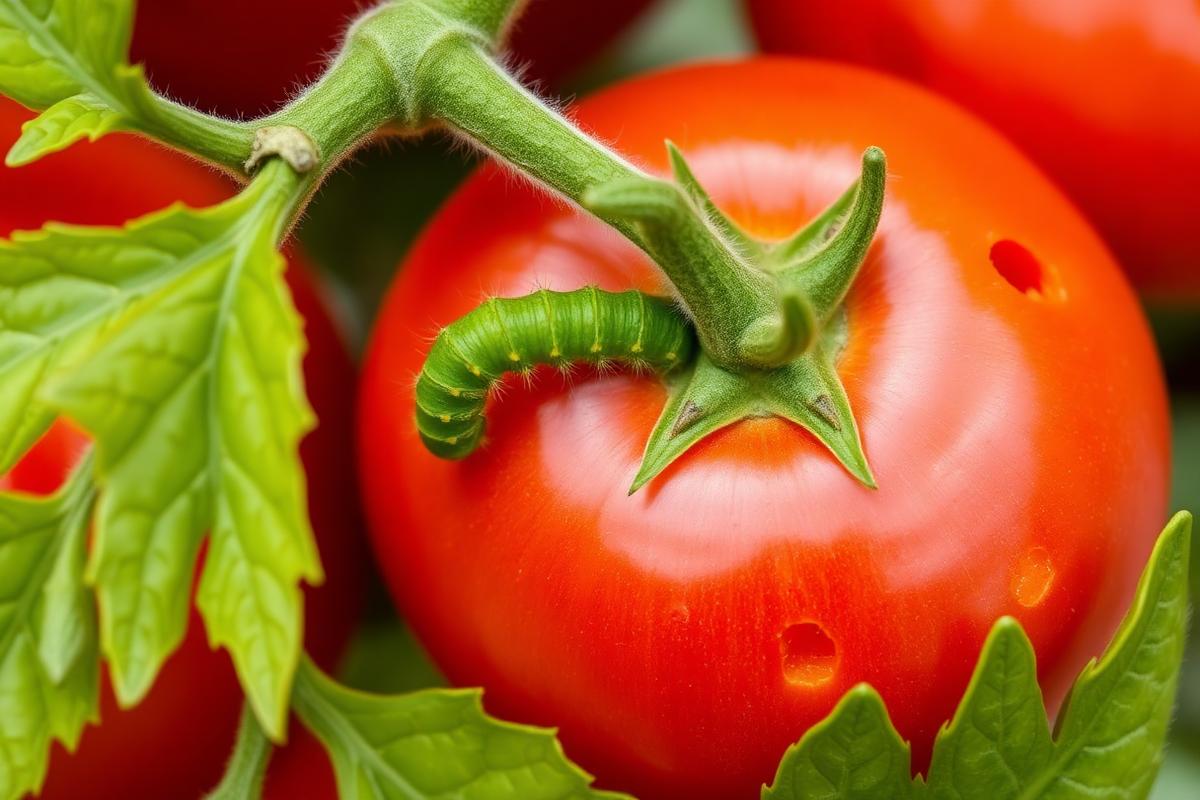
Before you spray anything, work out what you’re dealing with. Chewing damage, sucking damage and disease spots look different and need completely different responses — and half the insects on your tomato plant are on your side.
✅ Quick Answer
- Is this usually serious?
- Varies. A few chewed leaves is cosmetic. A caterpillar in the fruit is not.
- Most common causes
- Caterpillars, including hornworms and budworms — large ragged holes
- Aphids — sticky leaves, curling tips, clusters on new growth
- Whiteflies — clouds of tiny white insects when disturbed
- Spider mites — fine webbing and stippled, bronzed leaves
- Snails and slugs — irregular holes and slime trails, worst after rain
- Queensland fruit fly — sting marks and rotting fruit (Australia)
- First thing to check
- Go out at dusk or early morning with a torch and actually look under the leaves.
- What NOT to do
- Don’t blanket-spray. You’ll wipe out the ladybirds and predatory wasps doing your work for free.
👁 Look At Your Plant
Work through these before you decide what’s happening. Each one narrows it down.
- Large ragged holes and dark pellets on the leaves? Caterpillars — check stems and undersides.
- Sticky leaves and sooty black mould? Aphids or whiteflies feeding above.
- Fine webbing and dusty, stippled leaves in hot dry weather? Spider mites.
- Silvery slime trails and holes low on the plant? Snails and slugs.
- Small dimples or sting marks on fruit that then rots from inside? Fruit fly.
- Leaves with spots and yellow halos rather than missing tissue? That’s disease, not a pest.
Most Likely Causes
Caterpillars
Hornworms, budworms and loopers do the most obvious damage fast — whole leaves stripped, holes bored into fruit. They’re superbly camouflaged. Look for dark droppings on leaves and search directly above them.
Aphids
Clusters of soft green, black or grey insects on new growth and flower stems. They suck sap, distort tips, and excrete honeydew that grows sooty mould. Ants farming aphids is a strong clue.
Whiteflies
Tiny white insects that fly up in a cloud when you brush the plant. Heavy populations weaken plants and spread viruses. They live on leaf undersides.
Spider mites
Almost too small to see. They thrive in hot, dry, dusty conditions and leave fine webbing plus a bronzed, stippled look to the leaves.
Queensland fruit fly
A significant issue across much of eastern Australia. The female stings the fruit to lay eggs, and maggots develop inside apparently fine tomatoes. Monitoring, netting and prompt disposal of infested fruit matter more than spraying. Check your state or territory department’s current advice — some regions have reporting obligations.
🔧 What To Do Now
- Inspect leaf undersides and stems, morning and dusk, before deciding anything.
- Hand-pick caterpillars, snails and slugs. It’s the single most effective control in a home garden.
- Blast aphids off with a strong jet of water; repeat every few days.
- Raise humidity and hose down foliage for spider mites, which hate moisture.
- Net vulnerable fruit where fruit fly is active, and bag or solarise infested fruit rather than composting it.
- Encourage predators — ladybirds, lacewings, predatory wasps — by planting flowers and not spraying broadly.
- If you do use a product, choose a targeted, registered option and follow the label exactly, including withholding periods.
❌ What NOT To Do
- Don’t spray broad-spectrum insecticide ‘just in case’.
- Don’t spray in the middle of a hot day — you’ll burn the foliage.
- Don’t treat disease spots with insecticide, or insects with fungicide.
- Don’t leave fallen infested fruit lying under the plant.
💚 Can The Plant Recover?
Tomato plants tolerate a surprising amount of leaf damage and keep fruiting. Once the pest is identified and reduced, plants generally recover well. Fruit already damaged from the inside won’t recover — remove it.
Filed under Tomato Pests & Diseases. General gardening information — climate, soil, variety and local pests vary, so see our disclaimer.