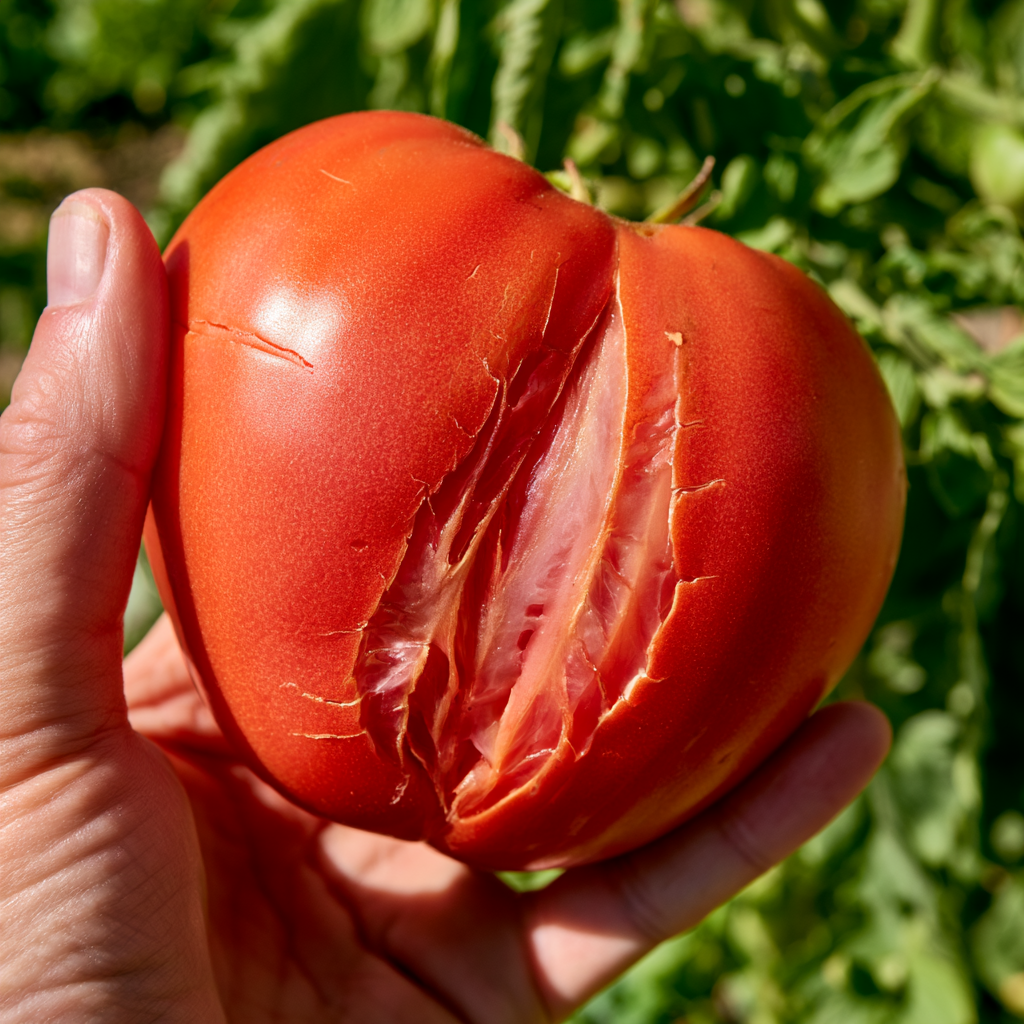
The inside of the fruit takes on water faster than the skin can stretch.
✅ Quick Answer
- Is this usually serious?
- Mild. Split fruit is still edible if picked promptly, but it spoils fast and invites rot and fruit fly.
- Most common causes
- Heavy rain or watering after dry soil
- Fruit left on the vine slightly too long
- Big swings between hot days and cool nights
- Thin-skinned varieties, especially cherry types
- Inconsistent watering habits generally
- First thing to check
- Did it rain heavily, or did you give the bed a big soak, in the last two days?
- What NOT to do
- Don’t leave split fruit on the plant hoping it’ll heal. It won’t, and it attracts pests.
👁 Look At Your Plant
Work through these before you decide what’s happening. Each one narrows it down.
- Cracks in rings around the stem (concentric) — usually rapid water uptake plus heat.
- Cracks running from the stem down the side (radial) — often more severe and lets rot in.
- Is it mostly your ripest fruit? Ripe fruit has the least stretch left in the skin.
- Are cherry tomatoes splitting while larger fruit is fine? That’s normal variety behaviour.
- Is the soil surface dry and crusted between waterings?
- Any signs of fruit fly sting or mould at the crack? Deal with that separately.
Most Likely Causes
Sudden water uptake
After dry conditions, roots grab everything available the moment water arrives. The flesh swells, the skin can’t keep pace, and it splits. A summer storm after a hot dry week is the classic trigger.
Over-ripe fruit left on the vine
The longer fruit hangs at full ripeness, the less elastic the skin becomes. Picking at first blush and finishing ripening indoors avoids most of this.
Temperature swings
Hot days followed by cool nights change how fast fruit expands and how much water it draws. Late-season splitting often has nothing to do with your watering can.
Variety
Some varieties simply crack. Cherry tomatoes and many heirlooms are famously split-prone; modern hybrids often have thicker, more forgiving skins.
🔧 What To Do Now
- Water consistently — a regular deep soak rather than drought-then-flood.
- Mulch to slow evaporation and hold moisture steady between waterings.
- Pick fruit at first blush of colour when rain is forecast and ripen it on the bench.
- Use split fruit straight away — sauce, roasting, salad — and remove the rest from the plant.
- For a wet climate, choose crack-resistant varieties next season.
- In pots, use a larger container and check moisture daily in summer.
❌ What NOT To Do
- Don’t try to compensate for coming rain by watering more beforehand.
- Don’t store split fruit with sound fruit. One rotting tomato takes the rest with it.
- Don’t assume it’s a disease. Splitting is mechanical.
- Don’t stop watering entirely to keep the fruit dry — you’ll cause blossom end rot instead.
💚 Can The Plant Recover?
The plant isn’t harmed at all, and later fruit will be fine if watering steadies. In a wet season some splitting is unavoidable — pick early and use the fruit quickly.
Filed under Tomato Fruit Problems. General gardening information — climate, soil, variety and local pests vary, so see our disclaimer.